In an era obsessed with energy efficiency and sustainability, a quiet technology is turning waste into watts. Thermoelectric Generators (TEGs), solid-state devices that convert heat directly into electricity, are moving from niche applications to mainstream market recognition. Driven by the global push for energy harvesting, IoT proliferation, and stringent environmental regulations, the TEG market is poised for significant growth.
Market Overview: From Steady to Strategic
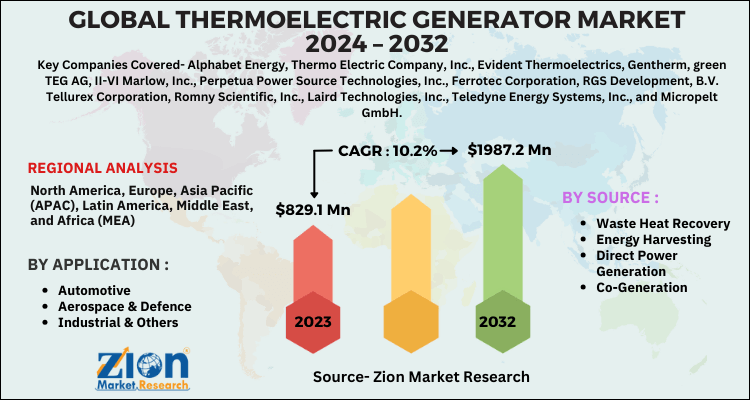
The global thermoelectric generator market, valued at approximately USD 500-600 million in 2024, is projected to grow at a compound annual growth rate (CAGR) of 10-14% over the next decade, potentially reaching over $1.5 billion by 2035. This growth is fueled not by a single killer application, but by a convergence of needs across diverse industries where reliability, waste heat recovery, and off-grid power are paramount.
Key Drivers: Why the Market is Igniting
-
The Imperative of Waste Heat Recovery: Industrial processes, automotive exhaust, and power generation lose enormous energy as waste heat. TEGs offer a compelling way to capture this low-grade heat and convert it into usable electricity, improving overall system efficiency and reducing carbon footprints. Regulations on emissions and fuel efficiency are a major catalyst here.
-
Proliferation of the IoT and Remote Monitoring: As sensors and monitoring devices spread to the most remote corners of the world (pipelines, forestry, maritime), the need for maintenance-free, lifelong power sources becomes critical. TEGs, powered by ambient heat differentials, provide a perfect solution, eliminating battery changes and enabling permanent installations.
-
Advancements in Material Science: The efficiency of a TEG is dictated by its “figure of merit” (ZT). Traditional materials like Bismuth Telluride are being surpassed by new nanostructured materials, skutterudites, and silicides. These advancements promise higher conversion efficiencies, making TEGs economically viable for more applications.
-
Demand in Aerospace & Defense: For deep-space missions (like NASA’s RTGs in Voyager, Curiosity) and unmanned military systems, TEGs provide reliable, vibration-free power where solar is unavailable or impractical.
-
Growth in Automotive & Transportation: While still emerging, automotive exhaust heat recovery for passenger vehicles and long-haul trucks remains a high-potential segment, aiming to power auxiliary systems and reduce alternator load.
Application Segments: Where TEGs are Making Power
-
Industrial & Manufacturing: The largest application segment, using TEGs to harvest heat from furnaces, boilers, and process streams to power wireless sensor networks.
-
Automotive & Transportation: Focused on exhaust heat recovery systems in trucks and as power sources for sensors in tire pressure monitoring and engine telematics.
-
Aerospace & Defense: A mature, high-value segment for satellite power, drone systems, and soldier-worn electronics.
-
Oil & Gas: Critical for powering wireless monitoring and safety systems on remote pipelines, wellheads, and offshore platforms, where heat differentials are abundant.
-
Consumer Electronics & Wearables: An emerging niche, exploring body heat harvesting for medical sensors and smartwatches.
Material Trends: The Core of Efficiency
The market is segmented by material type:
-
Bismuth Telluride (Bi2Te3): Dominates for low-temperature applications (below 250°C), especially in consumer electronics and refrigeration.
-
Lead Telluride (PbTe): The workhorse for mid-range temperatures (250-600°C), common in automotive and industrial waste heat recovery.
-
Skutterudites & Silicon-Germanium (SiGe): Gaining traction for high-temperature applications (>600°C) in aerospace and deep-well drilling. Research into organic and hybrid materials aims for flexibility and lower cost.
Regional Landscape: Global Heat Map
-
North America & Europe: Leading markets due to strong R&D investment, presence of key players (Gentherm, II-VI Marlow), and early adoption in aerospace/defense and automotive sectors.
-
Asia-Pacific: The fastest-growing region, driven by massive industrial bases in China and Japan, government initiatives for energy efficiency, and a booming electronics manufacturing sector. South Korea is also a significant player in material research.
-
Rest of the World: Growth is tied to oil & gas activities in the Middle East and Africa, where remote power for infrastructure is essential.
Challenges: The Hurdles to Leap
Despite promise, the market faces headwinds:
-
Relatively Low Efficiency: Compared to traditional dynamos or solar panels, TEGs typically have conversion efficiencies below 10%, limiting their use in high-power applications.
-
High Material and System Cost: Efficient thermoelectric materials often involve expensive, scarce elements (e.g., Tellurium), impacting upfront costs.
-
System Integration Complexity: Designing for optimal heat transfer and thermal management adds engineering complexity and cost to the final system.
The Future Outlook: A Warm Forecast
The trajectory is clear: growth through specialization and material innovation. The future will see:
-
Hybrid Systems: TEGs integrated with solar PV, batteries, or supercapacitors to create robust, multi-source energy harvesters for IoT.
-
New Material Breakthroughs: Research into abundant, non-toxic materials with high ZT values will be the key to unlocking mass-market adoption.
-
Expansion in Wireless Sensor Networks: As Industry 4.0 and smart infrastructure mature, TEGs will become the default power source for countless “fit-and-forget” sensors.
Read More-
https://www.zionmarketresearch.com/de/report/human-insulin-market
https://www.zionmarketresearch.com/de/report/artificial-intelligence-drug-discovery-market
https://www.zionmarketresearch.com/de/report/stigmasterol-rich-plant-sterols-market
https://www.zionmarketresearch.com/de/report/waterproofing-membrane-market-size
https://www.zionmarketresearch.com/de/report/golf-training-aids-market
Conclusion
The thermoelectric generator market is no longer just about exotic space probes. It is becoming an integral part of the energy harvesting ecosystem, turning the world’s wasted thermal energy into a valuable asset. While efficiency and cost challenges remain, the relentless drive for sustainability and autonomous power is ensuring that this solid-state, silent workhorse will find its place in our increasingly connected and energy-conscious world. For investors and industries alike, the message is clear: it’s time to tap into the heat.
