While its close relative, palm oil, often dominates headlines, Palm Kernel Oil (PKO) is a critical and distinct player in the global vegetable oil market. Derived from the kernel of the oil palm fruit (Elaeis guineensis), PKO offers unique functional properties that make it indispensable to several major industries. This article explores the current dynamics, key drivers, challenges, and future outlook of this specialized market.
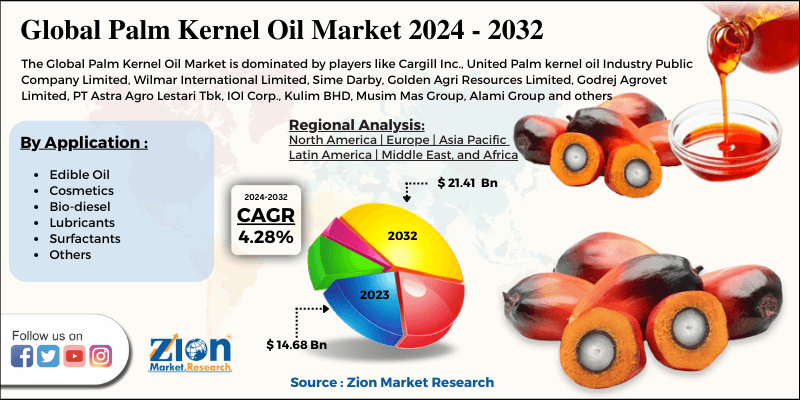
Market Overview and Key Characteristics
Palm kernel oil market is a lauric oil, meaning it is high in medium-chain fatty acids like lauric acid (around 48%). This gives it a sharp melting point, excellent lathering capabilities, and oxidative stability, distinguishing it from palm olein (used in cooking) and placing it in direct competition with other lauric oils like coconut oil.
The global PKO market is intrinsically linked to the palm oil industry, as it is a co-product. For every 10 tonnes of palm oil produced, approximately 1 tonne of PKO is yielded. This makes major palm oil producers—Indonesia, Malaysia, and Thailand—the undisputed leaders in PKO supply, controlling over 85% of global output.
Primary Market Drivers
-
Surge in Demand for Oleochemicals: This is the single most significant driver. PKO is a fundamental feedstock for oleochemicals—chemical compounds derived from plant and animal fats. These are used to produce:
-
Surfactants & Detergents: Lauric acid from PKO is prized for creating sodium lauryl sulfate (SLS) and sodium laureth sulfate (SLES), the foaming agents in countless shampoos, soaps, and household cleaners.
-
Personal Care & Cosmetics: Beyond cleansers, its emollient properties make it valuable in lotions, creams, lipsticks, and soaps.
-
Green Chemicals: The push for bio-based alternatives to petroleum-derived chemicals is boosting PKO demand for products like biodiesel, biolubricants, and plasticizers.
-
-
Food Industry Applications: In food, PKO is used for its stability and texture. It’s found in:
-
Confectionery Fats: As a component in cocoa butter equivalents (CBE) and substitutes (CBS) for chocolate and coatings.
-
Non-Dairy Creamers and Fats: Its functional properties are ideal for coffee whiteners and whipped toppings.
-
Baking Fats: Used in certain biscuits, pastries, and margarines.
-
-
Economic Viability: PKO remains cost-competitive compared to other lauric oils, especially coconut oil, whose production is more fragmented and subject to greater price volatility.
Major Challenges and Constraints
-
Sustainability and Deforestation Scrutiny: The PKO supply chain is under the same intense environmental scrutiny as palm oil. Issues of deforestation, loss of biodiversity, and peatland degradation in Southeast Asia have led to consumer backlash and stringent certification requirements (like RSPO – Roundtable on Sustainable Palm Oil). Companies are increasingly pressured to trace PKO back to sustainable sources.
-
Price Volatility: As a co-product, its supply is less flexible than demand. Fluctuations in palm oil production due to weather (El Niño), labor issues, or policy changes (e.g., export bans) directly impact PKO availability and price.
-
Health Perception Challenges: Although industry use is strong, in the food segment, consumer preference in Western markets is shifting towards oils perceived as healthier (e.g., olive, avocado, sunflower), often due to PKO’s saturated fat content. This drives more PKO into non-food industrial applications.
-
Competition from Alternatives: Coconut oil is its direct competitor. Synthetic surfactants and mineral oil-derived chemicals also present alternatives, though the trend towards bio-based products currently favors PKO.
Regional Market Dynamics
-
Asia-Pacific: The dominant production and consumption region, driven by local oleochemical industries and food processing. Indonesia and Malaysia are both major exporters and growing domestic consumers.
-
Europe: A large import market, driven primarily by the oleochemical and personal care sectors. It is also the region with the most stringent sustainability regulations.
-
North America: Steady demand from the food and cosmetics industries, with a growing focus on sustainably sourced PKO.
-
Africa: An emerging producer (Nigeria, Ghana) and a potential growth market for domestic consumption in food and soap.
Future Outlook and Trends
The PKO market is expected to see steady growth at a CAGR of approximately 3-5% over the next five years, fueled by:
-
Oleochemicals as the Growth Engine: The expansion of bio-surfactants and green chemicals will continue to be the primary demand pillar.
-
Segregation and Certification: The market for Identity Preserved (IP) and Mass Balance certified sustainable PKO will grow faster than the conventional market, creating price premiums and more transparent supply chains.
-
Technological Innovation: Research into higher-yielding oil palm varieties and more efficient kernel crushing processes could impact long-term supply dynamics.
-
Diversification of Sources: To mitigate supply chain risks, some importers are exploring nascent PKO production in Latin America and Africa, though Southeast Asia’s dominance will remain unchallenged for decades.
Read More-
https://www.zionmarketresearch.com/de/report/food-safety-testing-market
https://www.zionmarketresearch.com/de/report/master-data-management-market
https://www.zionmarketresearch.com/de/report/predictive-analytic-market
https://www.zionmarketresearch.com/de/report/soil-treatment-market
https://www.zionmarketresearch.com/de/report/eye-lens-market
https://www.zionmarketresearch.com/de/report/cryogenic-equipment-market
Conclusion
The palm kernel oil market is a vital, specialized segment of the global agro-industrial complex. Its fate is less tied to the frying pan and more to the factory, serving as a crucial renewable building block for countless everyday products. While navigating significant environmental and perceptual challenges, its unique chemical profile and economic advantage ensure its continued relevance. The future of PKO lies not in volume expansion alone, but in sustainable, traceable, and innovative applications that align with the global shift towards a bio-based economy.
